

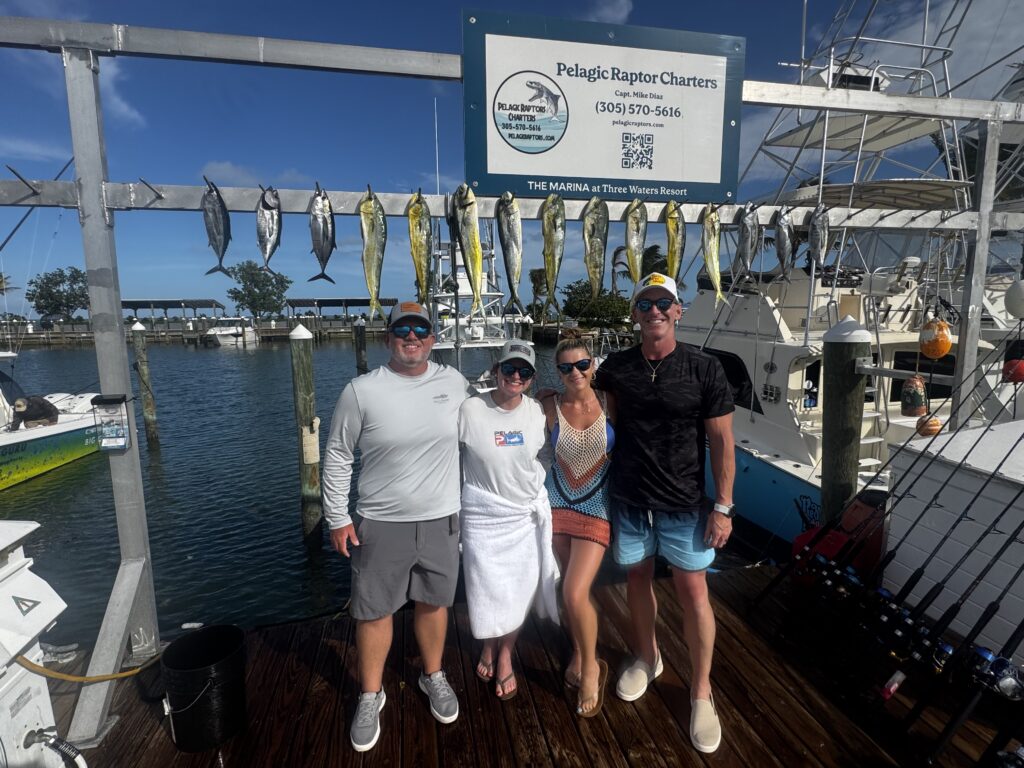
The Offshore Trip Almost Didn’t Happen
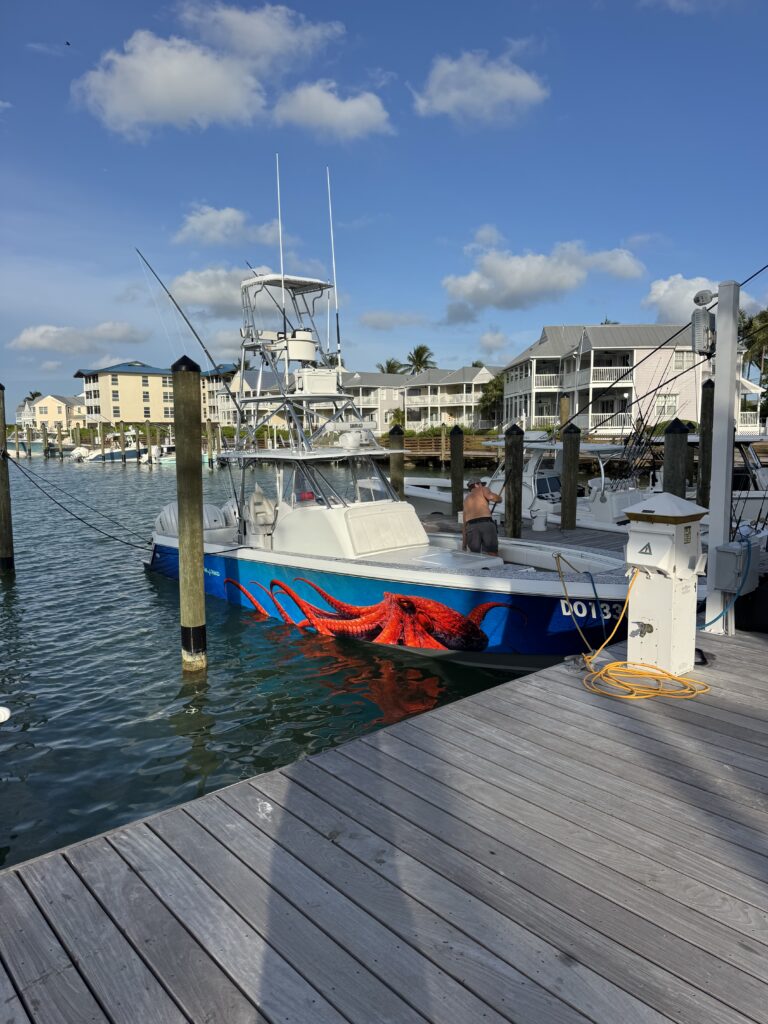
Some of the best fishing stories start with perfect weather and easy fishing.
This was not one of those stories.
Our final fishing day in the Florida Keys was booked as an offshore trip targeting mahi-mahi, blackfin tuna, and whatever else the ocean decided to give us.
But before the trip even started, we already knew it was going to be a challenge.
The forecast called for rough conditions, with steady winds and building seas. Still, after talking things through with Captain Mike, we decided we were up for the adventure as long as it could be done safely.
At 6:15 that morning, we climbed aboard Captain Mike’s 39-foot Contender — a beautiful offshore boat equipped with triple Yamaha outboards, a Seakeeper, generator, cabin, and all the comforts you could ask for on a rough offshore day.
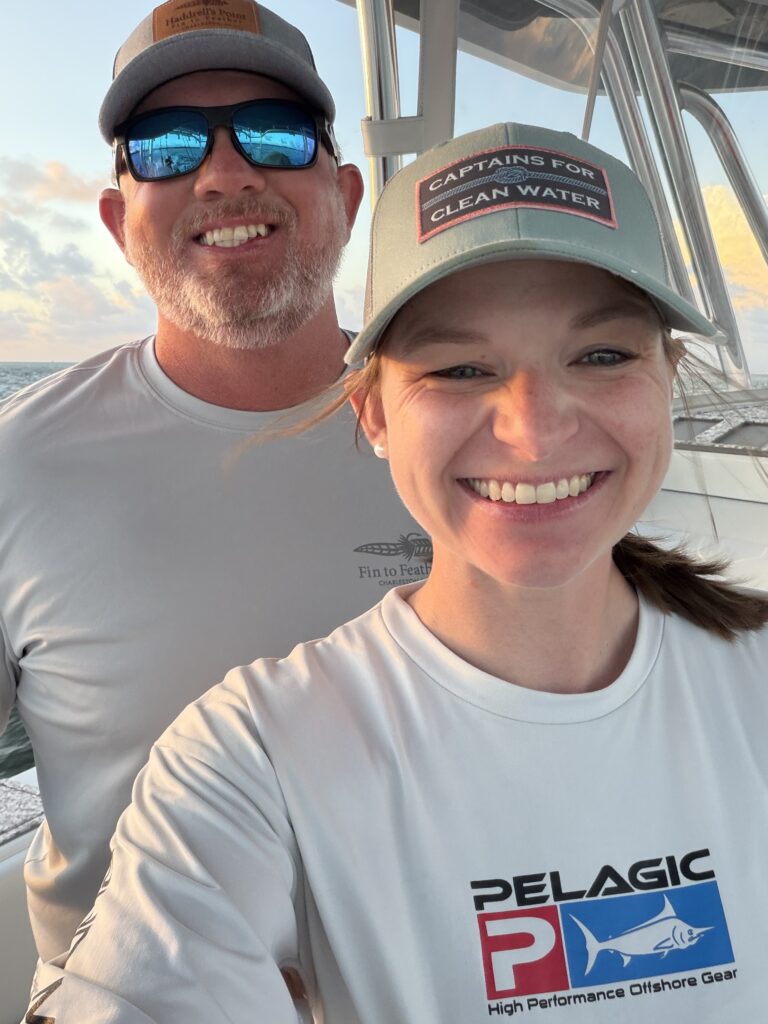
As we made the run toward Alligator Reef to catch bait, the conditions quickly reminded us that the ocean had other plans.
The waves were stacked tightly together, running around two to four feet at only a few seconds apart, making for an incredibly rough ride.
About three quarters of the way to the reef — only a few miles offshore — disaster hit.
The center engine’s lower unit failed.
Instantly, the trip changed from exciting to uncertain.
Running efficiently offshore on only two engines wasn’t really an option for the conditions we were facing, so Captain Mike gave us a choice:
head back and refund the trip completely
slowly putt offshore on two motors
or return to shore and attempt a lower unit swap
We told him we were here to fish, but we wanted to do it safely.
So back to the dock we went.
The rough seas continued pounding us all the way back in while we crawled toward shore around 12 miles per hour.
Once we arrived, Jack and Sam headed back to the hotel to let the dogs out while the crew scrambled to figure out a solution.
For a while, it honestly felt like the trip might be over before it ever truly started.
The replacement lower unit turned out to be the wrong rotation.
The stress level was high.
Everybody was frustrated.
And the weather certainly wasn’t improving.
Then somehow the day turned around.
Another captain graciously offered us the use of his own 39-foot Contender for the day, and suddenly everybody jumped into action transferring rods, bait, tackle, and gear from one boat to the next.
The replacement boat didn’t have the cabin, air conditioning, or bathroom that the first boat offered, but at that point none of us cared.
We were going fishing.
Once we finally headed back offshore, the ocean greeted us with what fishermen would politely call “sporty conditions.”
Steady 20–30 mph winds mixed with constant three to five foot seas and occasional six and seven foot waves throughout the day.
While most of the chaos happened in the cockpit, Harriet and I spent much of the day standing on the bow searching for life offshore.
We constantly scanned the horizon for frigate birds and diving flocks because offshore fishermen know those birds usually mean bait — and bait often means fish nearby.
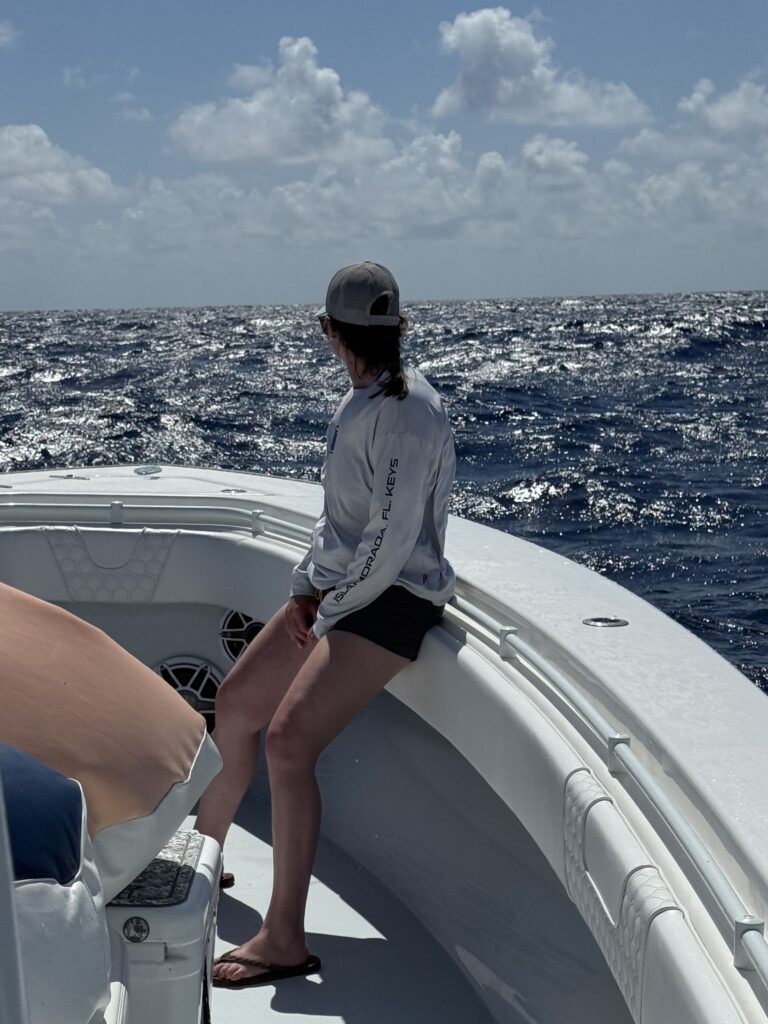
Every wave launched spray over the front of the boat while we tried to focus through the wind and rough conditions.
Meanwhile, Jack and Braxton, the first mate, spent what felt like half the day clearing scattered sargassum weed off the trolling lines.
Normally offshore weed lines create perfect trolling conditions, but the rough weather had broken everything apart and spread it across the ocean, turning every pass into constant maintenance.
Still, even through the chaos, the ocean felt alive.
Managing Type 1 Diabetes Offshore
While most people were focused on the rough seas, engine trouble, and whether we were even going to make it offshore, Harriet had another layer of planning happening in the background.
Harriet lives with Type 1 diabetes and wears a Dexcom G6 continuous glucose monitor along with an Omnipod 5 insulin pump. Together, the system helps track her blood sugar in real time and automatically adjust insulin delivery throughout the day.
The technology helps tremendously, but it doesn’t replace preparation.
Before every major trip, especially a long day offshore, we pack extra insulin, backup pump supplies, spare Dexcom sensors, and fast-acting sugar snacks in case her blood sugar drops unexpectedly. We also make sure insulin stays protected from the Florida heat, which can affect its effectiveness if left exposed for too long.
One of the biggest challenges with Type 1 diabetes isn’t necessarily the activity itself—it’s the unpredictability. The plan for this trip changed multiple times throughout the morning. We dealt with mechanical failures, delayed departure times, rough seas, and a completely different schedule than we originally expected.
Those kinds of changes can impact meals, activity levels, and blood sugar management.
Fortunately, years of experience have taught us that preparation creates confidence. The goal isn’t to eliminate every challenge. It’s to be ready when challenges happen.
That’s one of the reasons we started The Diabetic Travel Guide in the first place. We want people to see that Type 1 diabetes doesn’t have to stop you from chasing adventures. It simply requires a little extra planning before you leave the dock.
At the same time, I was able to keep an eye on Harriet’s blood sugar throughout the day using the Dexcom Follow app, giving us one less thing to worry about while we focused on finding fish.
Still, even through the chaos, the ocean felt alive.
Flying fish skipped across the surface ahead of the boat.
Massive sea turtles drifted offshore.
A giant stingray slowly glided beneath us.
At one point Harriet even caught a remora — one of the strange suction-based fish that normally attach themselves to sharks, sea turtles, and large rays.
And throughout the day we repeatedly watched schools of mahi-mahi glowing bright green and blue underneath the boat.
As stressful as the rough start had been, one thing that helped everybody keep going was humor.
At some point during the trip, we discovered Captain Mike’s favorite song was “Firework” by Katy Perry.
Somehow it instantly became the unofficial theme song of the day.
Every time morale started dropping or the fishing slowed down, somebody would throw the song back on.
Without fail, Captain Mike would immediately start dancing around the boat, laughing, and completely reset the mood onboard.
And honestly, for captains trying to salvage difficult trips in rough conditions, morale matters more than most people probably realize.
Once everybody loosened up and started enjoying the day again, the fishing finally started turning around too.
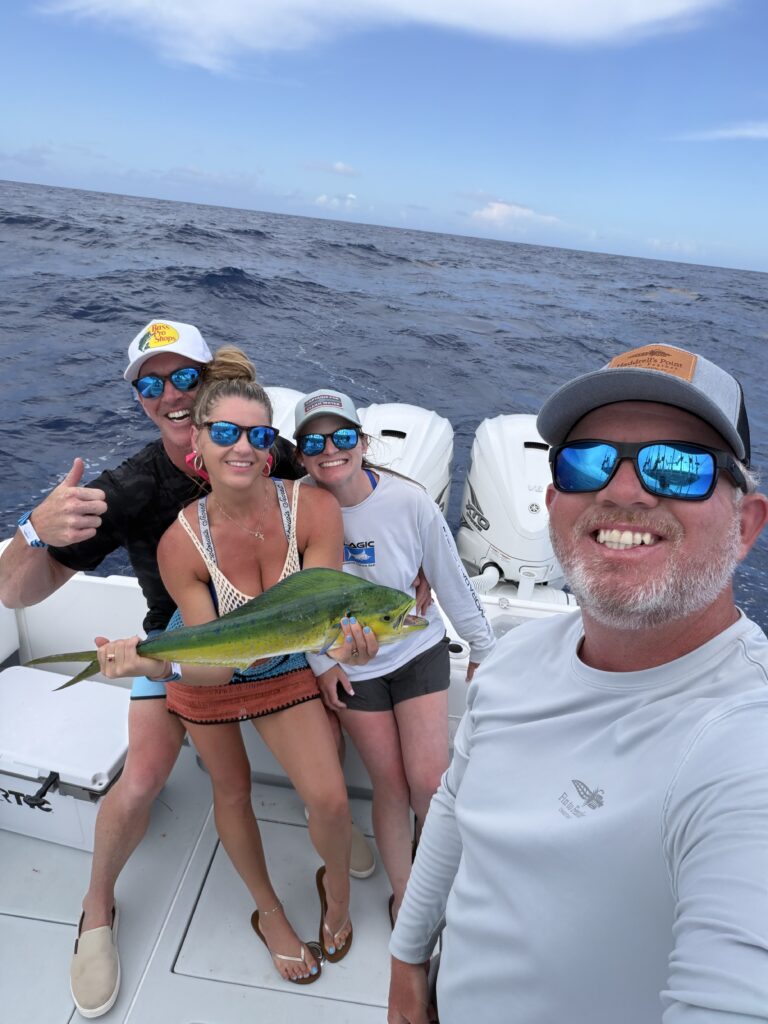
By the end of the trip, we had caught around seven blackfin tuna and eleven mahi-mahi despite the conditions.
Considering how the morning started, it honestly felt like a huge win.
But one of the best moments of the entire trip came afterward.
That night, we brought fresh mahi and tuna back to Angler & Ale at Hawks Cay and had them prepare our catch for dinner.
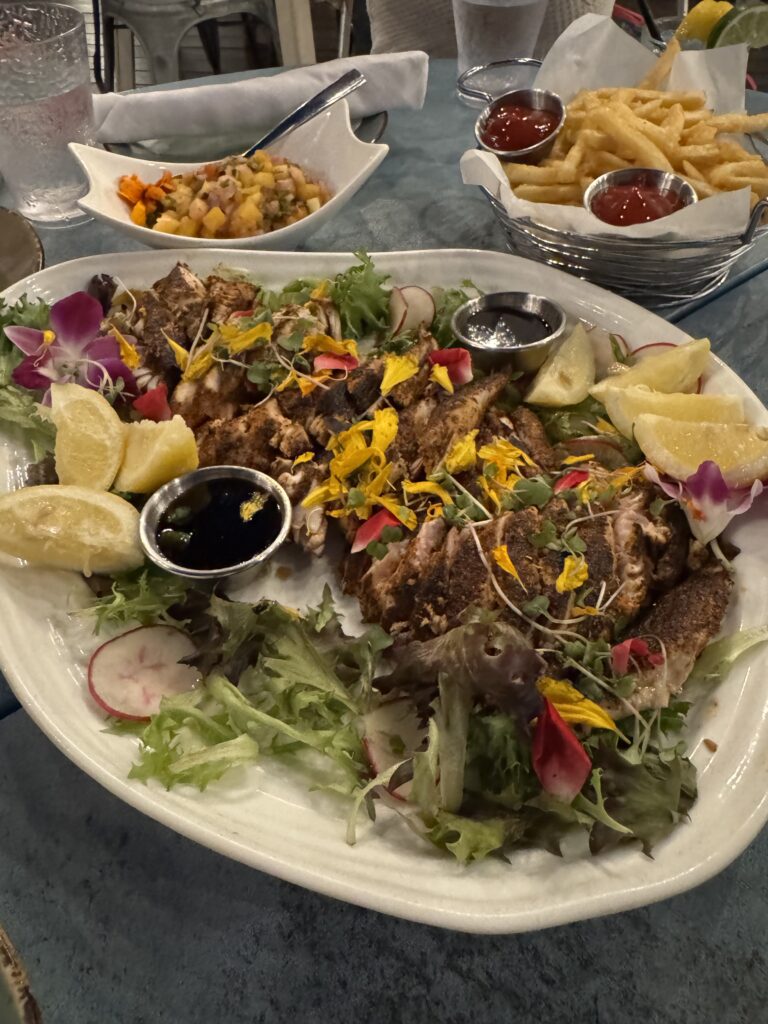
After rough seas, mechanical failures, long hours offshore, and nonstop chaos, sitting down together eating fresh fish from a trip that almost never happened felt like the perfect ending.
By then, the fish box was full, everybody was exhausted, and Harriet’s blood sugar had cooperated through a day that looked nothing like the plan we started with that morning.
Looking back now, the fish were only part of what made the day memorable.
It was the teamwork.
The rough conditions.
The setbacks.
The laughs.
The music.
The wildlife.
And the fact that nobody gave up on making the trip happen.
Sometimes the best adventures are the imperfect ones.
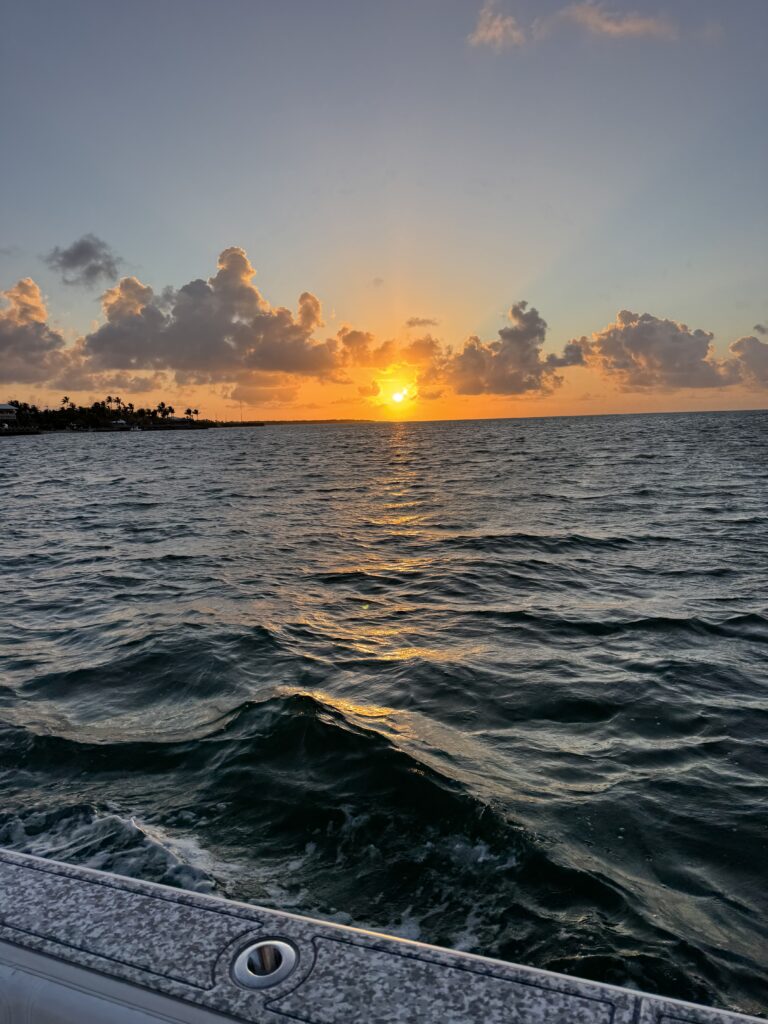
And this offshore trip is one we’ll definitely never forget.
Thank you Capt. Mike with Pelagic Raptors. We will be back soon!
Please check them out if you ever need and offshore guide in the Keys who will stop at nothing to put you on fish. https://pelagicraptors.com